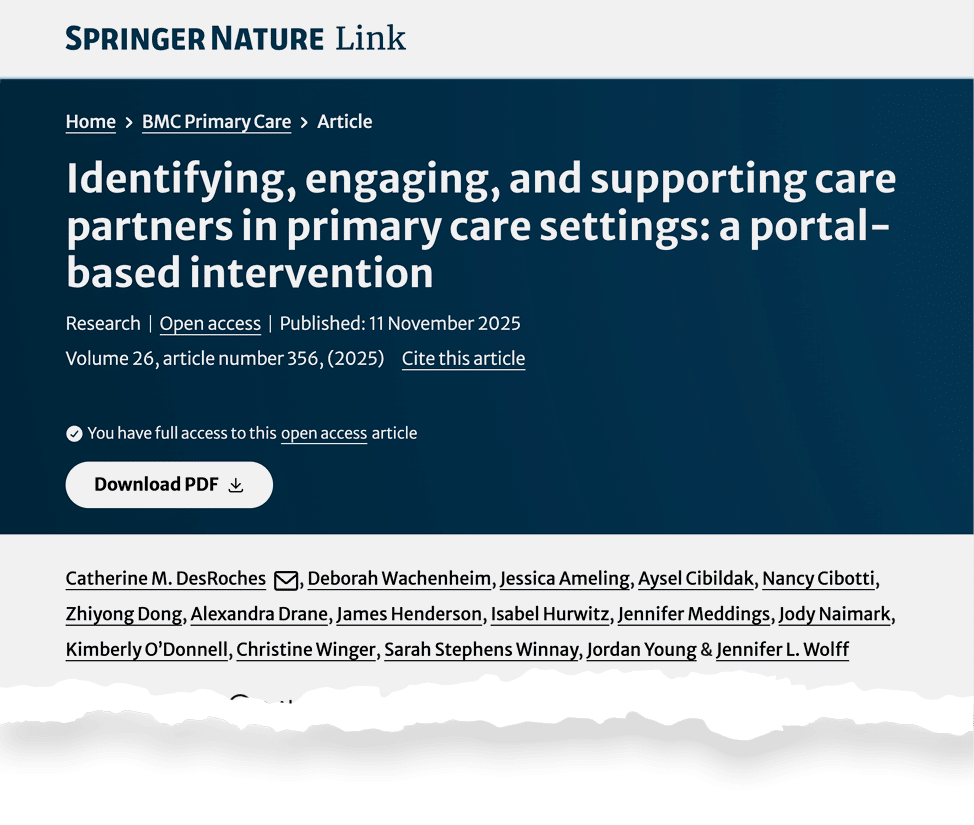
Millions of people in the U.S. act as care partners, helping family and friends manage their health. But in most health systems, these care partners are invisible—they’re rarely identified or supported. A research team led by Dr. Catherine M. DesRoches at OpenNotes (Beth Israel Deaconess Medical Center), along with collaborators from Johns Hopkins University and ARCHANGELS, tested a new, simple way to change that. Read the findings in BMC Primary Care (open access).
At five primary care clinics in two health systems, researchers used the electronic patient portal to reach out to patients before their visits. Patients were asked if they had caregiving responsibilities. If they did, they received a tool called the Caregiver Intensity Index (CII) to assess how demanding their caregiving role was. Based on their responses, they were also offered local resources that could help.
Between 2022 and 2024, nearly 32,000 patients received the pre-visit questionnaire, and more than half completed it. Around 1 in 5 respondents said they were caregivers. Of these, about one-third used the CII and many accessed the suggested support resources.
This study is important because it shows that primary care practices can easily identify and support caregivers using tools they already have. For patients and care partners, it means better recognition and access to help. For clinicians, it’s a practical way to improve care by including the often-overlooked people who play a critical role in a patient’s health. And for researchers, it offers a promising model to study and improve caregiver support in everyday healthcare.


 Except where otherwise noted, the content by OpenNotes is licensed under a Creative Commons Attribution 4.0 International License.