This opinion in the American Academy of Family Physicians (AAFP)’ Family Practice Management (FPM) paints a picture of what the future of care might look like. Two fictional vignettes use an AI coach as a way of bridging the time before a patient can next see their clinician and a way for both parties to review notes from their meeting.
AI
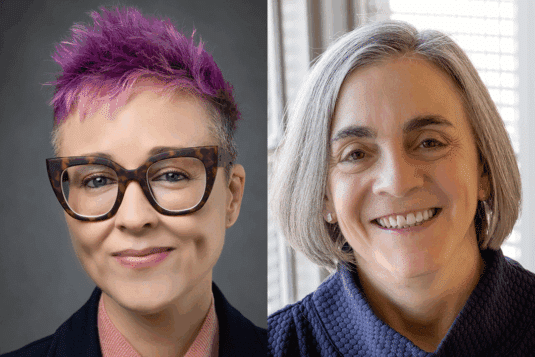
Designing for Techquity: Ensuring Open Notes Serve All Patients
Cait DesRoches and Liz Salmi reflect on the evolution of open notes and issue a clear call to action for oncology. Drawing on over fifteen years of research, they underscore that while open notes consistently strengthen trust, understanding, and patient engagement, access is not equitable. They argue that transparency without equity is incomplete.

Critical AI Health Literacy as Liberation Technology: A New Skill for Patient Empowerment
As artificial intelligence transforms health care, patients are increasingly using generative AI to question, reinterpret, and even resist institutional decisions. This provocative commentary, from Hugo Campos and Liz Salmi, introduces “Critical AI Health Literacy” as a new skill set for patients seeking agency and equity in the digital age of medicine.

Near-wins in the pursuit of quality: does transparency matter if no one is looking?
In this new editorial for BMJ Quality & Safety, Sigall Bell, MD and Cait DesRoches, DrPH reflect on how access to medical notes can improve the quality of care, but only if patients are able to read and understand them. In the time between medical visits, when patients are monitoring their own health, AI may open a new frontier.
AI-supported Digital OpenNotes in Primary Care Setting
AI could be a solution to many challenges in primary care such as time constraints and difficulties in patient understanding. However, there are risks of inappropriate or inconsistent responses. A new German research alliance is studying this emerging field.
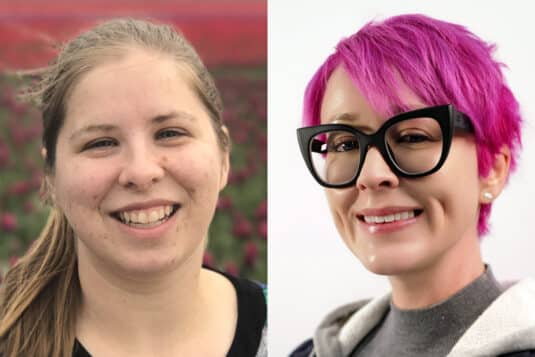
A Proof-of-Concept Study for Patient Use of Open Notes with Large Language Models
Can AI chatbots help patients make sense of their medical notes? This first-of-its-kind study published in JAMIA Open finds that with the right prompt, large language models may become powerful partners in understanding complex health information.
 Except where otherwise noted, the content by OpenNotes is licensed under a Creative Commons Attribution 4.0 International License.